<?xml version="1.0" encoding="utf-8" ?>
<rdf:RDF xmlns:rdf="http://www.w3.org/1999/02/22-rdf-syntax-ns#" xmlns:dc="http://purl.org/dc/elements/1.1/" xmlns:syn="http://purl.org/rss/1.0/modules/syndication/" xmlns="http://purl.org/rss/1.0/">


<channel rdf:about="http://www.mursi.org/search_rss">
  <title>Mursi Online</title>
  <link>http://www.mursi.org</link>

  <description>
    
            These are the search results for the query, showing results 1 to 15.
        
  </description>


  <image rdf:resource="http://www.mursi.org/logo.png"/>

  <items>
    <rdf:Seq>
      
        <rdf:li rdf:resource="http://www.mursi.org/images/david-and-pat-turton-with-ulikoro-komoru-in-2023"/>
      
      
        <rdf:li rdf:resource="http://www.mursi.org/news-items/david-turton-1940-2023"/>
      
      
        <rdf:li rdf:resource="http://www.mursi.org/new-publication-lands-of-the-future"/>
      
      
        <rdf:li rdf:resource="http://www.mursi.org/quicktime/nitha.mov"/>
      
      
        <rdf:li rdf:resource="http://www.mursi.org/quicktime/tourists.mov"/>
      
      
        <rdf:li rdf:resource="http://www.mursi.org/quicktime/conversation.mov"/>
      
      
        <rdf:li rdf:resource="http://www.mursi.org/quicktime/mursi-interview.mov"/>
      
      
        <rdf:li rdf:resource="http://www.mursi.org/news-items/ArbreBeja.jpg"/>
      
      
        <rdf:li rdf:resource="http://www.mursi.org/images/thatching"/>
      
      
        <rdf:li rdf:resource="http://www.mursi.org/images/copy_of_duelling.jpg"/>
      
      
        <rdf:li rdf:resource="http://www.mursi.org/images/lakereduction.jpg"/>
      
      
        <rdf:li rdf:resource="http://www.mursi.org/images/what-future-for-lake-turkana"/>
      
      
        <rdf:li rdf:resource="http://www.mursi.org/images/komorakorahomeview.jpg"/>
      
      
        <rdf:li rdf:resource="http://www.mursi.org/images/copy_of_the-mursi-and-their-neighbours-b"/>
      
      
        <rdf:li rdf:resource="http://www.mursi.org/images/map-06.pdf"/>
      
    </rdf:Seq>
  </items>

</channel>


  <item rdf:about="http://www.mursi.org/images/david-and-pat-turton-with-ulikoro-komoru-in-2023">
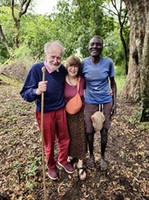
    <title>David and Pat Turton with Ulikoro Komoru in 2023.</title>
    <link>http://www.mursi.org/images/david-and-pat-turton-with-ulikoro-komoru-in-2023</link>
    <description></description>
    
    <dc:publisher>No publisher</dc:publisher>
    <dc:creator>admin</dc:creator>
    <dc:rights></dc:rights>
    <dc:date>2024-03-04T20:14:49Z</dc:date>
    <dc:type>Image</dc:type>
  </item>


  <item rdf:about="http://www.mursi.org/news-items/david-turton-1940-2023">
    <title>David Turton (1940-2023) </title>
    <link>http://www.mursi.org/news-items/david-turton-1940-2023</link>
    <description>Obituary by Jed Stevenson</description>
    <content:encoded xmlns:content="http://purl.org/rss/1.0/modules/content/"><![CDATA[<h3>It is with great sadness that we note the death of David Turton, founder of this website. The following tribute has just been published in <i>Anthropology Today</i>.</h3>
<p>One of the first anthropologists to work in lowland Ethiopia, David Turton drew attention to peoples on the periphery and the effects on them of state and capitalist projects – notably wildlife conservation and the building of large dams. He engaged in public anthropology, feeling a duty to serve as an advocate for people whom he knew first as research participants but whom he later became friends with and whom he viewed as kindred spirits. Just four months before he died, at the age of 83, he travelled back to Ethiopia to renew friendships with people he had known for more than fifty years.</p>
<p>David was born in London in 1940. His father was a shipping agent at the London Docks and his mother a school secretary. At 18, not having the necessary O-Levels to attend university, he undertook preparatory work at a Catholic seminary. He was selected to attend the English College in Rome, where he spent three years completing his Lic. Phil. <em>cum laude</em> at the Pontifical Gregorian University. Unsure of his calling, he returned to England in 1963 having secured a rare agreement to be readmitted should he have a change of heart. He completed his missing O-Levels and went to the London School of Economics in 1964 to do a BSc in sociology, where he met his future wife, Pat. They were assigned as tutor partners for the optional course they both chose in social anthropology.</p>
<p>David went on to complete a PhD in social anthropology at the LSE under the supervision of James Woodburn, a specialist on African hunter-gatherers. Interested in going to Ethiopia, David read the work of the 19<sup>th</sup> century explorer Vittorio Bottego and was struck by a description of hunter-gatherers living on the banks of the River Omo. They were the Kwegu, and they lived in close relation to a larger group, the Mursi. In the dry season of 1968, he negotiated with the Mursi to pitch his tent beside the Omo, where they were cultivating sorghum. He stayed by the Omo, slowly learning their language, until the time came for the Mursi to leave for their cattle camps. By this time, he had learned enough of the language and gained sufficient trust to be allowed to join them on the journey to the cattle camps.</p>
<p>Living and traveling with the Mursi helped David see that their way of life was threefold, involving flood-retreat cultivation along the Omo and Mago rivers, cattle herding, and shifting rain-fed cultivation. None of these strategies on its own was sufficient but in combination they provided a livelihood. The Mursi likened these activities to the three hearth-stones that support their cooking pots, all three being vital for their well-being. David’s recognition of these patterns – as described in his 1973 <a href="https://www.mursi.org/documents-and-texts/theses/turton-david/view">doctoral thesis</a> – led to a deeper appreciation of a culture that most outsiders had hitherto misunderstood and stereotyped as purely pastoralist.</p>
<p>David took up a lectureship at Manchester University in 1971, and continued to carry out fieldwork among the Mursi, initially focusing on <a href="https://www.mursi.org/introducing-the-mursi/leadership/orators-jalaba">political oratory</a>. The Mursi used public debates to reach collective decisions, particularly at times of crisis. Perennial concerns included conflict with neighbouring groups and territorial encroachment by wildlife reserves. As well as the Omo National Park, the Mursi were significantly affected by the establishment of the Mago National Park in 1978, which incorporated the majority of Mursiland. These tensions formed the backdrop to six <a href="https://www.mursi.org/audiovisual/film-and-video-clips/television-documentaries">ethnographic films</a> that David made with director Leslie Woodhead between 1974 and 2001. In 1987, inspired by his friend and former student Dan Marks, David established the <a href="https://granadacentre.co.uk/">Granada Centre for Visual Anthropology</a> at the University of Manchester.</p>
<div class="newsImageContainer"><a href="https://www.mursi.org/images/david-and-pat-turton-with-ulikoro-komoru-in-2023/image/image_view_fullscreen" id="parent-fieldname-image"> <img alt="David and Pat Turton with Ulikoro Komoru in 2023." class="newsImage" height="267" src="https://www.mursi.org/images/david-and-pat-turton-with-ulikoro-komoru-in-2023/image_mini" title="David and Pat Turton with Ulikoro Komoru in 2023." width="200" /> </a>
<p class="discreet"><span class=" kssattr-atfieldname-imageCaption kssattr-templateId-widgets/string kssattr-macro-string-field-view" id="parent-fieldname-imageCaption-18fcdf80-41a5-486b-93e6-2415626390c1"> David and Pat Turton with Ulikoro Komoru in 2023. </span></p>
</div>
<p>Although he strongly identified as an anthropologist, David did not define himself by his job. He was grateful that he had the opportunity to be do what he loved and believed to be meaningful, and to be led by his curiosity. It was in this spirit that he took early retirement from Manchester University in 1990 to have more time to pursue his fieldwork and other interests. He often joked that after his retirement he had “never been busier!”</p>
<p>Through the 1980s and 1990s David served on committees for Oxfam, the Windle Trust, and various professional associations; he also served as editor of the <em>Journal of the Royal Anthropological Institute</em> (1983-86) and the journal <em>Disasters</em> (1989-95). In 1996, he became director of the <a href="https://www.rsc.ox.ac.uk/">Refugee Studies Centre</a> at Oxford University, where he had a transformative impact – leading the expansion of its summer school and establishing its Master’s programme.</p>
<p>In the early 2000s David was galvanised into a new phase of activity as plans were announced for the building of the Gibe III dam on the Omo. He scoured reports of engineers and hydrologists to appraise the implications of the dam and associated sugar plantations for the peoples of the region. In an <a href="https://www.mursi.org/pdf/RAS%20Talk%20-%20Copy.pdf/">address at SOAS</a> in 2010, he skewered the studies carried out by the dam’s backers and laid out the consequences of disrupting the Omo’s annual flood for the 100,000 people living downstream. Of the three “hearth-stones” on which local people depended, the flood was the most important. If the project proceeded as planned, it would undermine the entire subsistence economy.</p>
<p>David was not opposed to the dam itself. Rather, his concern was that the costs and benefits of the project were <a href="https://riviste-clueb.online/index.php/anpub/article/view/127">unfairly distributed</a>. No compensation was offered to the Mursi and their neighbours, either for the loss of the flood or for lands seized for plantations. In contrast to the open debates practiced by the Mursi, the government announced its plan as a <em>fait accompli</em> with scant efforts made to consult “project-affected people”. The Mursi referred to the architects of the project as “people who keep their mouths shut”. Refusing to stay quiet himself, David penned op-eds and supported all those calling for justice. Given a choice between gentle backchannel pressure or shouting injustice from the rooftops, David was unequivocal: “I’m with the shouters”.</p>
<p>In practice, David rarely raised his voice. His words were always measured and imbued with sympathy for the marginalised. As a scholar and as a person he was unfailingly generous. David and Pat’s home served as a meeting-place for scholars and practitioners, and many formative conversations were held on their couch and around their dinner table. His legacies include the <a href="https://www.canr.msu.edu/oturn/">Omo-Turkana Research Network</a>, an international consortium of social and environmental scientists focused on the region, and <a href="https://www.mursi.org/">Mursi Online</a>, which continues to publicise the challenges faced by the peoples of the Lower Omo Valley.</p>
<p>He is survived by his wife Pat, son Danny, daughter-in-law Lisa, and two grandsons, Zed and Asa.</p>
<p><em>A version of this obituary was published in Anthropology Today, Vol 40, No 1 (February 2024)</em></p>]]></content:encoded>
    <dc:publisher>No publisher</dc:publisher>
    <dc:creator>admin</dc:creator>
    <dc:rights></dc:rights>
    <dc:date>2024-03-04T20:00:00Z</dc:date>
    <dc:type>News Item</dc:type>
  </item>


  <item rdf:about="http://www.mursi.org/new-publication-lands-of-the-future">
    <title>New publication: Lands of the Future </title>
    <link>http://www.mursi.org/new-publication-lands-of-the-future</link>
    <description>A new edited volume on pastoralism, land deals, and tropes of modernity in Eastern Africa</description>
    <content:encoded xmlns:content="http://purl.org/rss/1.0/modules/content/"><![CDATA[<p><i>Lands of the Future</i>, an edited volume on  challenges facing pastoralist communities in East Africa, considers the position of pastoralists at the intersection of competing projects of 'future-making' -- including projects of expropriation, large-scale land transfers, and hydropower projects.</p>
<p>"Rangeland, forests and riverine landscapes of pastoral communities in  Eastern Africa," the editors note, "are increasingly under threat. Abetted by states who  think that outsiders can better use the lands than the people who have  lived there for centuries, outside commercial interests have displaced  indigenous dwellers from pastoral territories. This volume presents case studies  from Eastern Africa, based on long-term field research, that vividly  illustrate the struggles and strategies of those who face dispossession  and also discredit ideological false modernist tropes like  ‘backwardness’ and ‘primitiveness’."</p>
<p>Five of the book's thirteen chapters focus on the Lower Omo, including Shauna LaTosky on Mun (Mursi) customary land use and FPIC, Lucie Buffavand on the Mela (Bodi) experience of 'the brunt of state power', Fana Gebresenbet on villagization in Ethiopia's lowlands, and Jed Stevenson &amp; Benedikt Kamski on hydropower and irrigation development in the Omo-Turkana basin. An overview chapter by David Turton, 'Breaking every rule in the book', tells the story of river basin development in the Lower Omo Valley.</p>
<p>Other chapters (notably those by Jonah Wedekind on "investment failure and land conflicts on the Oromia-Somali frontier," and by Maknun Ashami &amp; Jean Lydall on the Awash Valley) provide useful counterpoints to events in the region.</p>
<p>The book is available to order from the <a class="external-link" href="https://www.berghahnbooks.com/title/GabbertLands">Berghahn</a> <span class="external-link">website</span>, where Echi Gabbert's <a class="external-link" href="https://www.berghahnbooks.com/downloads/intros/GabbertLands_intro.pdf">introduction</a> -- "Future-making with pastoralists" is also available as a free download.</p>
<p>Until 28 February 2021, a 50% reduction on the price of the book is available with the code GAB907.</p>
<p><i>Lands of the future: Anthropological perspectives on pastoralism, land deals, and tropes of modernity in Eastern Africa</i>. Edited by Echi Christina Gabbert, Fana Gebresenbet, John G. Galaty, and Günther Schlee. Oxford: Berghahn (January, 2021)</p>]]></content:encoded>
    <dc:publisher>No publisher</dc:publisher>
    <dc:creator>Edward (Jed) Stevenson</dc:creator>
    <dc:rights></dc:rights>
    <dc:date>2021-02-07T16:56:09Z</dc:date>
    <dc:type>News Item</dc:type>
  </item>


  <item rdf:about="http://www.mursi.org/quicktime/nitha.mov">
    <title>The Nitha</title>
    <link>http://www.mursi.org/quicktime/nitha.mov</link>
    <description>A clip from the film ‘Nitha’, showing the culmination of the age-set ceremony, held at Kurum in southern Mursiland. In the very early morning, the new set is given its name (‘Geleba’) by the presiding elder, Ulijeholi Garana. This was the first age set to be formed since 1961.</description>
    
    <dc:publisher>No publisher</dc:publisher>
    <dc:creator>admin</dc:creator>
    <dc:rights></dc:rights>
    <dc:date>2020-07-30T19:32:41Z</dc:date>
    <dc:type>File</dc:type>
  </item>


  <item rdf:about="http://www.mursi.org/quicktime/tourists.mov">
    <title>Tourists at the bridge</title>
    <link>http://www.mursi.org/quicktime/tourists.mov</link>
    <description>Unedited footage shot during the making of the film ‘Fire will eat us’ in January 2001. The tourists shown were from ‘Discovery Expeditions’ of Antwerp, Belgium. They were filmed meeting a group of Mursi at the bridge over the River Mago.</description>
    
    <dc:publisher>No publisher</dc:publisher>
    <dc:creator>admin</dc:creator>
    <dc:rights></dc:rights>
    <dc:date>2020-07-30T19:32:41Z</dc:date>
    <dc:type>File</dc:type>
  </item>


  <item rdf:about="http://www.mursi.org/quicktime/conversation.mov">
    <title>Conversation in the grain store</title>
    <link>http://www.mursi.org/quicktime/conversation.mov</link>
    <description>A clip from the film ‘Fire will eat us’. Bedameri, a Mursi government official, explains to his listeners the latest twist in the story of the government’s demands that the Mursi young men who took part in a raid on the Aari in January 1999 should give themselves up to the police. The conversation takes place in a shelter constructed some time earlier to hold relief food, at Gorobura, in northern Mursiland.</description>
    
    <dc:publisher>No publisher</dc:publisher>
    <dc:creator>admin</dc:creator>
    <dc:rights></dc:rights>
    <dc:date>2020-07-30T19:32:40Z</dc:date>
    <dc:type>File</dc:type>
  </item>


  <item rdf:about="http://www.mursi.org/quicktime/mursi-interview.mov">
    <title>Interview with Komor-a-kora, Bio-iton-giga and Arinyatuin</title>
    <link>http://www.mursi.org/quicktime/mursi-interview.mov</link>
    <description>Unedited footage from an interview shot in northern Mursiland, during the making of the films ‘The Land is Bad’ and ‘Nitha’. The three men were asked to give their views on the foreign tourists who had become regular visitors to their country in recent years.</description>
    
    <dc:publisher>No publisher</dc:publisher>
    <dc:creator>admin</dc:creator>
    <dc:rights></dc:rights>
    <dc:date>2020-07-30T19:32:40Z</dc:date>
    <dc:type>File</dc:type>
  </item>


  <item rdf:about="http://www.mursi.org/news-items/ArbreBeja.jpg">
    <title>Photograph taken at Makki by Anna Albiach (2012)</title>
    <link>http://www.mursi.org/news-items/ArbreBeja.jpg</link>
    <description>Anna Albiach, Makki, Mago Valley, 2012</description>
    
    <dc:publisher>No publisher</dc:publisher>
    <dc:creator>Mursi Online Editor</dc:creator>
    <dc:rights></dc:rights>
    <dc:date>2020-07-24T16:05:33Z</dc:date>
    <dc:type>Image</dc:type>
  </item>


  <item rdf:about="http://www.mursi.org/images/thatching">
    <title>Thatching</title>
    <link>http://www.mursi.org/images/thatching</link>
    <description>Thatching a grain store at Kon Ba, Mago Valley (Ben Dome, 2004)</description>
    
    <dc:publisher>No publisher</dc:publisher>
    <dc:creator>admin</dc:creator>
    <dc:rights></dc:rights>
    <dc:date>2020-07-24T15:33:50Z</dc:date>
    <dc:type>Image</dc:type>
  </item>


  <item rdf:about="http://www.mursi.org/images/copy_of_duelling.jpg">
    <title>Men's traditional bark cloth</title>
    <link>http://www.mursi.org/images/copy_of_duelling.jpg</link>
    <description>Image taken in 1896 on Bottego expedition (Vannutelli and Citerni 1899:320)

</description>
    
    <dc:publisher>No publisher</dc:publisher>
    <dc:creator>admin</dc:creator>
    <dc:rights></dc:rights>
    <dc:date>2020-07-22T15:46:53Z</dc:date>
    <dc:type>Image</dc:type>
  </item>


  <item rdf:about="http://www.mursi.org/images/lakereduction.jpg">
    <title>Lake Turkana diagram</title>
    <link>http://www.mursi.org/images/lakereduction.jpg</link>
    <description></description>
    
    <dc:publisher>No publisher</dc:publisher>
    <dc:creator>John</dc:creator>
    <dc:rights></dc:rights>
    <dc:date>2020-07-22T15:46:53Z</dc:date>
    <dc:type>Image</dc:type>
  </item>


  <item rdf:about="http://www.mursi.org/images/what-future-for-lake-turkana">
    <title>What Future for Lake Turkana?</title>
    <link>http://www.mursi.org/images/what-future-for-lake-turkana</link>
    <description></description>
    
    <dc:publisher>No publisher</dc:publisher>
    <dc:creator>John</dc:creator>
    <dc:rights></dc:rights>
    <dc:date>2020-07-22T15:46:53Z</dc:date>
    <dc:type>Image</dc:type>
  </item>


  <item rdf:about="http://www.mursi.org/images/komorakorahomeview.jpg">
    <title>Ulikoro Konyonomora was the priest of the Dola until his death in 2012. In this photograph, he is pictured wearing the necklace of the priest, which is the priestly insignia.</title>
    <link>http://www.mursi.org/images/komorakorahomeview.jpg</link>
    <description>Ulikoro Konyonomora was the priest of the Dola until his death in 2012. In this photograph, he is pictured wearing the necklace of the priest, which is the priestly insignia.</description>
    
    <dc:publisher>No publisher</dc:publisher>
    <dc:creator>John</dc:creator>
    <dc:rights></dc:rights>
    <dc:date>2020-07-22T15:46:53Z</dc:date>
    <dc:type>Image</dc:type>
  </item>


  <item rdf:about="http://www.mursi.org/images/copy_of_the-mursi-and-their-neighbours-b">
    <title>The Mursi and their neighbours (b)</title>
    <link>http://www.mursi.org/images/copy_of_the-mursi-and-their-neighbours-b</link>
    <description></description>
    
    <dc:publisher>No publisher</dc:publisher>
    <dc:creator>Mursi Online Editor</dc:creator>
    <dc:rights></dc:rights>
    <dc:date>2020-07-22T15:46:53Z</dc:date>
    <dc:type>Image</dc:type>
  </item>


  <item rdf:about="http://www.mursi.org/images/map-06.pdf">
    <title>A Community-based Map of Mursiland</title>
    <link>http://www.mursi.org/images/map-06.pdf</link>
    <description>This map was made  over a two year period by asking Mursi  what features of their territory it was important to map.  Being pastoralists, their first concern was with resources used by cattle, particularly saltlicks and hot springs from which cattle as well as wildlife obtain essential mineral nutrients. They also wanted to map their villages and cultivation sites. 

A Mursi was given GPS training to enable him to assist with the map making. When a base map of Mursi  land use had been completed, this was filled in with other important features. The symbols on the map were drawn by a Mursi so that other Mursi would have an easier time identifying the map features. Many Mursi who cannot read or write can read this map. They are helped in identifying such features as grasslands and rivers by the high quality of the satellite images. A version of the map has also been made in the Mursi language using the syllabic script of Amharic, the national language of Ethiopia.  The Mursi have been impressed by the way the map gives them the ability to talk about their land. They often spread it out on a cowskin to discuss its various features and never seem to tire of looking at it.

The map has been endorsed by many community leaders, some of whom are using it to plan the Mursi Community Conservation Area. This is a combined conservation and tourism management project, designed to provide revenue for the Mursi community in response to the loss of grazing and water resources over the past half century, due partly to climate change and partly to the encroachment of national parks on their territory.</description>
    
    <dc:publisher>No publisher</dc:publisher>
    <dc:creator>admin</dc:creator>
    <dc:rights></dc:rights>
    <dc:date>2020-07-22T15:46:53Z</dc:date>
    <dc:type>File</dc:type>
  </item>


</rdf:RDF>