<?xml version="1.0" encoding="utf-8" ?>
<rdf:RDF xmlns:rdf="http://www.w3.org/1999/02/22-rdf-syntax-ns#" xmlns:dc="http://purl.org/dc/elements/1.1/" xmlns:syn="http://purl.org/rss/1.0/modules/syndication/" xmlns="http://purl.org/rss/1.0/">


<channel rdf:about="http://www.mursi.org/search_rss">
  <title>Mursi Online</title>
  <link>http://www.mursi.org</link>

  <description>
    
            These are the search results for the query, showing results 1 to 15.
        
  </description>


  <image rdf:resource="http://www.mursi.org/logo.png"/>

  <items>
    <rdf:Seq>
      
        <rdf:li rdf:resource="http://www.mursi.org/documents-and-texts/oral-texts/oral-text-3-the-parting-on-the-omo-waters"/>
      
      
        <rdf:li rdf:resource="http://www.mursi.org/documents-and-texts/oral-texts/how-death-arrived"/>
      
      
        <rdf:li rdf:resource="http://www.mursi.org/documents-and-texts/oral-texts/copy_of_how-death-arrived"/>
      
      
        <rdf:li rdf:resource="http://www.mursi.org/documents-and-texts/oral-texts/copy2_of_how-death-arrived"/>
      
      
        <rdf:li rdf:resource="http://www.mursi.org/change-and-development/the-gibe-iii-dam"/>
      
      
        <rdf:li rdf:resource="http://www.mursi.org/change-and-development/large-scale-irrigation"/>
      
      
        <rdf:li rdf:resource="http://www.mursi.org/change-and-development/large-scale-irrigation/large-scale-irrigation"/>
      
      
        <rdf:li rdf:resource="http://www.mursi.org/change-and-development/the-gibe-iii-dam/the-gibe-iii-dam"/>
      
      
        <rdf:li rdf:resource="http://www.mursi.org/documents-and-texts/reports/african-resources-working-group-arwg-mass-starvation-and-regional-conlfict-predicted"/>
      
      
        <rdf:li rdf:resource="http://www.mursi.org/change-and-development/press-coverage"/>
      
      
        <rdf:li rdf:resource="http://www.mursi.org/press-links"/>
      
      
        <rdf:li rdf:resource="http://www.mursi.org/documents-and-texts/oral-texts/copy3_of_how-men-came-to-mursi"/>
      
      
        <rdf:li rdf:resource="http://www.mursi.org/new-publication-lands-of-the-future"/>
      
      
        <rdf:li rdf:resource="http://www.mursi.org/neighbours/suri-chai"/>
      
      
        <rdf:li rdf:resource="http://www.mursi.org/comments"/>
      
    </rdf:Seq>
  </items>

</channel>


  <item rdf:about="http://www.mursi.org/documents-and-texts/oral-texts/oral-text-3-the-parting-on-the-omo-waters">
    <title>Oral Text 4: The Parting of the Omo waters</title>
    <link>http://www.mursi.org/documents-and-texts/oral-texts/oral-text-3-the-parting-on-the-omo-waters</link>
    <description>Mederêlu Udjusha, Ulumholi, July 2010</description>
    <content:encoded xmlns:content="http://purl.org/rss/1.0/modules/content/"><![CDATA[<p style="text-align: justify; "> </p>
<p style="text-align: justify; "><i>Age kohoin bha twê.<br /></i>We came from below the ground.</p>
<p style="text-align: justify; "><i>Na kohoinê kuducha kuducha kuducha.<br /></i>As we came we dropped dead, dead, dead.</p>
<p style="text-align: justify; "><i>Na zuo bega ke kataka logo ertabhwê na garrai.<br /></i>Those people who understood the word [tradition/wisdom] all died.</p>
<p style="text-align: justify; "><i>Na ginu yogê zukti bekingingi ne, na agge ngani karteo.<br /></i>This is what they say happened a long time ago - we didn't see it.</p>
<p style="text-align: justify; "><i>Na zua ganyo erta erta erta.<br /></i>All my people have died, died, died.</p>
<p style="text-align: justify; "><i>Na agge, huli kelnga hali keresso, na bha kordotisen, erru na alea.<br /></i>As for us, when we die, and are buried, our children will stay on.</p>
<p style="text-align: justify; "><i>Agge kohenyo kareni, nga kodorno bhwê keli ke Gowa.<br /></i>We came from downstream [south] and arrived at a place called Gowa.</p>
<p style="text-align: justify; "><i>Na huli kohonyoyê kelo ma tano na zuo aminsenê hiri dhebi.<br /></i>When we arrived we were on the other side of the river. The people ‘fed’ a man with clay.</p>
<p style="text-align: justify; "><i>Na zuo say na ‘Tingting! Tingting! Tingting! Tingting!’, zuo say nga nga.<br /></i>Then the people said ‘Tingting! Tingting!’ Tingting!’ [onomatopoeic sound for stamping]. That’s what they said.</p>
<p style="text-align: justify; "><i>Na kiwana hiri dhonê na komokê budulai. Zuo hey sen gay na iwana hiri dhonê na komokê budulai.<br /></i>They chose a man to carry out a special ceremony with coffee and a clay potion [<i>budulai</i>].</p>
<p style="text-align: justify; "><i>Na mey ong harle “kele'eneng?”<br /></i>And eventually they said, “What should we do?”</p>
<p style="text-align: justify; "><i>Na zuo dogê go, na imi milanê bunna.<br /></i>They held a meeting and drank coffee.</p>
<p style="text-align: justify; "><i>Na iwane na aje hiri na mato.<br /></i>They took it and gave it to the man to drink.</p>
<p style="text-align: justify; "><i>Na hula ma ship na, zuo say na ke ‘Tingting! Tingting! Tingting! Tingting!’<br /></i>And when the water parted the people said ‘Tingting! Tingting!’ Tingting!’</p>
<p style="text-align: justify; "><i>Na zuo say na ke “daktu bio” na huli daganê bioyê sabo kadagana uli a korroi sabbo na dog ma na kinê tetetetetetete, bio eredon.</i></p>
<p style="text-align: justify; ">The people said “Lets drive the cattle”. First they drove a black bull. As it stepped into the river the waters parted, [making the sound] <i>tetetetetetetete</i>, and then the rest of the cattle crossed.</p>
<p style="text-align: justify; "><i>Na ma nertenê. Zuo eredoné.<br /></i>The waters divided and people crossed.</p>
<p style="text-align: justify; "><i>Kadengi, kadengi.<br /></i>They began crossing, crossing.</p>
<p style="text-align: justify; "><i>Dogê hun, dogê jujujuju.<br /></i>When they entered the water they made the splash, splash sounds of the water.</p>
<p style="text-align: justify; "><i>Na oku dok na hiri abu se ke: ‘Dorl, Dorl na’. Na huli doê jujuju na, inaga oku dhok.<br /></i>They all crossed and an elder said, ‘This place is called <i>Dorl</i>’. The people had crossed— splash, splash— forever.</p>
<p style="text-align: justify; "><i>Naga zua ngaha kogey errisay kurio wurio.<br /></i>The women made the crossing last.</p>
<p style="text-align: justify; "><i>Na huli zuo huin na dogê dorr tana nga, ma gira hoine buuw, na itinyaneo.<br /></i>Once all the people had reached the mud on this side of the river, the water came together again.</p>
<p style="text-align: justify; "><i>Huli errisê na ushinya nai kipta goiy doiy ta buusesê koje kureo.<br /></i>When everyone had crossed, a big tree appeared.</p>
<p style="text-align: justify; "><i>A hiri kele'ke Magaiyai.<br /></i>The man was from the Magaiyai family.</p>
<p style="text-align: justify; "><i>Anganga keseka Dorl a barari, a barari, a barari nga.<br /></i>That’s why they say Dorl is a special, potent, and powerful place.</p>]]></content:encoded>
    <dc:publisher>No publisher</dc:publisher>
    <dc:creator>Mursi Online Editor</dc:creator>
    <dc:rights></dc:rights>
    <dc:date>2012-12-17T17:15:00Z</dc:date>
    <dc:type>Page</dc:type>
  </item>


  <item rdf:about="http://www.mursi.org/documents-and-texts/oral-texts/how-death-arrived">
    <title>Oral Text 6: How death came to the Mursi</title>
    <link>http://www.mursi.org/documents-and-texts/oral-texts/how-death-arrived</link>
    <description></description>
    <content:encoded xmlns:content="http://purl.org/rss/1.0/modules/content/"><![CDATA[<p><i>Agge be sabbo kingi Muni kosudeneo, na rese ninge <br /></i>A long time ago we Mursi shed our skins, and there was no death</p>
<p><i>Na rese agge bassai, na ngamia agge buhay bassabwê<br /></i>Death was brought to us by the monitor lizard, so now we have been cursed by the monitor lizard</p>
<p><i>Na sude’a ainê konu<br /></i>And the shedding of skin that was ours, he gave to the snake.</p>
<p><i>Ngamia sude konu, na agge geria<br /></i>So now the snake sheds its skin, and we die!</p>
<p><i>Na huli konu sudene nga shick holo a bassaine<br /></i>Now when the snake shed its skin it was because it heard the singing of the monitor lizard</p>
<p><i>Bassai erock kio tuno, na chorl holo, na say ke<br /></i>The monitor lizard climbed a tree and sang a song and said this:</p>
<p><i>“Muni sudê, konu erê.<br /></i>“The snake dies, the Mursi sheds his skin.</p>
<p><i>Muni sudê, konu erê.”<br /></i>The snake dies, the Mursi sheds his skin.”</p>
<p><i>Nga shick nga, na kono tawa ija nong shick konu, na tamara resebwê<br /></i>The snake was close by and he heard this and he didn’t want to die,</p>
<p><i>Na aiwo na teheno bassai bago.<br /></i>So he came and decided to eat the monitor lizard.</p>
<p><i>Na ginoni, na essay ke:<br /></i>He asked him, saying:</p>
<p><i>Heee!! <br /></i><i>Heee!!</i></p>
<p><i>Seni ker noi?”<br /></i>Who are you saying will die?”</p>
<p><i>Bassai<br /></i>And the monitor lizard was afraid of being eaten and said this:</p>
<p><i>Tengera bagwê na sena ke: <br /></i>Was afraid of being eaten and said this:</p>
<p><i>“Ah, ah, ah!<br /></i>“No! No!</p>
<p><i>Ker munio, ker munio”<br /></i>The Mursi will die, the Mursi will die.”</p>
<p><i>“Eeeh! Chorloni!”<br /></i>“OK then, sing!”</p>
<p><i>Na mea bassai chorloni, se yak e:<br /></i>So then when the monitor lizard sang, he said this:</p>
<p><i>“Muni erê, konu sudê<br /></i>“The Mursi dies, the snake sheds its skin.</p>
<p><i>Muni erê, konu sudê.”<br /></i>The Mursi dies, the snake sheds its skin.”</p>
<p><i>Na mea konu sudê, na agge Muni kerea.<br /></i>So now the snake sheds its skin, and we Mursi die.</p>
<p><i>Na mea resse aggosê bha dhôk!<br /></i>And this is how death came to earth forever.</p>]]></content:encoded>
    <dc:publisher>No publisher</dc:publisher>
    <dc:creator>Mursi Online Editor</dc:creator>
    <dc:rights></dc:rights>
    <dc:date>2012-12-18T09:55:00Z</dc:date>
    <dc:type>Page</dc:type>
  </item>


  <item rdf:about="http://www.mursi.org/documents-and-texts/oral-texts/copy_of_how-death-arrived">
    <title>Oral Text 3: How the Mursi came to Mursiland</title>
    <link>http://www.mursi.org/documents-and-texts/oral-texts/copy_of_how-death-arrived</link>
    <description>Lugulointheno Jordomo, Waran (Maganto) 1996</description>
    <content:encoded xmlns:content="http://purl.org/rss/1.0/modules/content/"><![CDATA[<p style="text-align: justify; "> </p>
<p><i>Nga hulunu nga, zuo el Dirkaye.</i><br />At that time, the people were at Dirka.</p>
<p><i>Uli a hola, hira ko ona, ko Tongokuri, koi ma Warroin.</i><br />A white bull belonging to a man of my mother’s clan, Tongokuri, went to drink at the Omo.</p>
<p><i>Uli bitheni, Bule, koi ma Warroin.</i><br />A white bull with black patches, belonging to [the Priest] Bule, went to drink at the Omo.</p>
<p><i>Bio huli hey Shauraye, ulinya hey Warro.</i><br />When the cows went to drink at Shaura, the bulls went to the Omo.</p>
<p><i>Lusi a Tongokuri seathe shune ke ‘Harle beg uli!’</i><br />Tongokuri told his son,‘Watch that bull!’</p>
<p style="text-align: justify; "><i>Ina komoruin seathe shune ke, ‘Harle beg uli!’.</i><br />The Priest told his son,‘Watch that bull!’</p>
<p style="text-align: justify; "><i> </i></p>
<p style="text-align: justify; "><i>‘Na huli uli genee na bio wheni, bhwe dhoi uliyoye – koba ne bhwe mate arra!’</i><br />‘When the bull is grazing, and the cows come to drink [at Shaura], find out where it  goes - follow it and find out where it drinks’.</p>
<p style="text-align: justify; "><i>Beku dirr na huli bio dongchinyana nga, uli choi dorogi, hash!</i><br />So he [Tongokuri’s son] watched his bull carefully. When the cows came to drink it crashed off  into the bush.</p>
<p style="text-align: justify; "><i>Kobu dirr – ina Tongokuri. Bunathe zuo. Irru mai-ni.</i><br />He followed it and followed it until it came to a place [on the Omo] where there were people. That’s where it drank.</p>
<p style="text-align: justify; "><i>Arte ko zuo nga tana – Nydi. Nyidi el nga tana.</i><br />There were people on the other bank - Kwegu.  There were Kwegu on the east bank.</p>
<p style="text-align: justify; "><i>‘Kuduma hiri nano, ee!’</i><br />[He saw a Kwegu and said] ‘I’ve found someone to be my client!’</p>
<p style="text-align: justify; "><i>‘Kuduma inye so!’</i><br />‘I’ve found <i>you</i>!’ said the Kwegu.</p>
<p style="text-align: justify; "><i>‘Na nga bi-a?’</i><br />‘So what about this bull?’ said Tongokuri’s son.</p>
<p style="text-align: justify; "><i>‘A bi kaje anyoi ma nga chir’.</i><br />‘It’s a bull I always bring here to drink’ said the Kwegu.</p>
<p style="text-align: justify; "><i>Uli a komoruin koiye – koi ko lusi bunthathen Warro nganga.</i><br />The other bull also went as far as the Omo, followed by the Priest’s son.</p>
<p style="text-align: justify; "><i>Daino togoin lorna ma gussioni.</i><br />In the evening they drove the bulls home, carrying water in their gourds.</p>
<p style="text-align: justify; "><i>‘Wa ulinya kopto na au tordo ori?’</i><br />‘Did you follow the bulls?’ asked the people. ‘Did you see where they went?’</p>
<p style="text-align: justify; "><i>‘Ulinya wa aita na aita mai pu rammai, el tui nga’.</i><br />‘They kept on going until they got to a huge river, over there’ said the boys.</p>
<p style="text-align: justify; "><i>‘Ma a meri?’</i><br />‘A big river?’</p>
<p style="text-align: justify; "><i>‘He! A meri so. Mai pu rammai huli kogwin nga, hey nganga teee hung – ba nga dhoneo.’</i><br />‘Big? It’s so big you can’t see where it ends.’</p>
<p style="text-align: justify; "><i>Daino zuo mezedoni. Mezeeee…na sene ke ‘Harle belle kete zigini’.</i><br />In the evening the people debated. They debated and debated until eventually they decided to move. ‘Lets leave tomorrow morning’ they said.</p>
<p style="text-align: justify; "><i>Belle zuo ziwone hung-ni, buuu.</i><br />In the morning they all set off together.</p>
<p style="text-align: justify; "><i>Na when na Dorlo tano elane bai, na chibe mora, mora,mora.</i><br />When they got to Dorl, on the west bank of the Omo, they stopped and tied up all the calves.</p>
<p style="text-align: justify; "><i>Bio el whuin.</i><br />The cattle were not allowed to drink [from the Omo].</p>
<p style="text-align: justify; ">Zuo el whuin.<br />The people were not allowed to drink [from the Omo].</p>
<p style="text-align: justify; "><i>Bage debi.</i><br />They smeared clay on their bodies.</p>
<p style="text-align: justify; "><i>Na kiwana hiri. Kaje berr – berr-a ma.</i><br />They chose a man and gave him a spear – a man’s spear.</p>
<p style="text-align: justify; "><i>Kabathen debi a korra na kubuti hugio.</i><br />He smeared black clay on his body and red clay on the blade of the spear.</p>
<p style="text-align: justify; "><i>Eden</i><i> kiangi wush – dhobwe berr – orr berr.</i><br />He raised his arm and aimed the spear four times.</p>
<p style="text-align: justify; "><i>Berr koi na kon kio tano – dhobwano tano na kon kio nga tana, tomotheyo.</i><br />He threw the spear and it hit a Tomothey tree on the opposite bank.</p>
<p style="text-align: justify; "><i>Hir-aga dug ma.</i><br />Then he walked into the river.</p>
<p style="text-align: justify; "><i>Huli dug ma nga, bodine ke kio hula nga kita nga.</i><br />When he got into the river, he turned into a tree - like this one here.</p>
<p style="text-align: justify; "><i>Ngani zuo dhone gora wa dhone hirio hung.</i><br />Then the people followed him into the river.</p>
<p style="text-align: justify; "><i>Ma kenchabwe na te hula nga ba nga.</i><br />And the waters parted and the river became dry land, just like it is here.</p>
<p style="text-align: justify; "><i>Ma kedhu hung-ni - nga gia nga au nga, gia au nga.</i><br />The waters just parted  – some went in this direction, some went in that direction.</p>
<p style="text-align: justify; "><i>A logo hang – Mun a berari so!</i><br />It’s really true - the Mursi are powerful!</p>]]></content:encoded>
    <dc:publisher>No publisher</dc:publisher>
    <dc:creator>Mursi Online Editor</dc:creator>
    <dc:rights></dc:rights>
    <dc:date>2012-12-18T09:55:00Z</dc:date>
    <dc:type>Page</dc:type>
  </item>


  <item rdf:about="http://www.mursi.org/documents-and-texts/oral-texts/copy2_of_how-death-arrived">
    <title>Oral Text 5: How a Mursi became a Kwegu</title>
    <link>http://www.mursi.org/documents-and-texts/oral-texts/copy2_of_how-death-arrived</link>
    <description></description>
    <content:encoded xmlns:content="http://purl.org/rss/1.0/modules/content/"><![CDATA[<p style="text-align: justify; ">Ages ago, when our fathers were on their way to the Omo from the west, there were two brothers. The elder brother's wife was pregnant, and when they got to Dirka [a hill, 30 kilometres west of the Omo] she was ready to give birth. So the younger brother took the cattle on to drink at the hot spring at Dirka, while the elder brother stayed with his wife. After she had given birth, the placenta would not come away. Her husband saw vultures in the sky some way off and said 'I will go and get some meat so that my wife can drink soup.' When he reached the spot where the vultures were, he found some Kwegu eating the meat. He took some of the meat and made soup for his wife, eating the rest himself. It was giraffe meat - something we priests never eat.</p>
<p style="text-align: justify; ">When the younger brother came back with the cattle, the elder brother said `Don't come near. We have eaten giraffe.' His brother was shocked and said,</p>
<p style="text-align: justify; ">`Why did you eat it?'<br />`Because my wife was ill. You take the cattle on yourself. I will stay with the Kwegu.'</p>
<p style="text-align: justify; ">So the younger brother went on with the cattle. When he had crossed the Omo and reached the plain on the other side, he built compounds for his cattle and asked whether anyone had seen his brother.</p>
<p style="text-align: justify; ">`My brother who ate giraffe and joined the Kwegu — where is he?'<br />`He is at a place called Alaka, on the Omo.'</p>
<p style="text-align: justify; ">So the younger brother went to see his elder brother, here at Alaka.</p>
<p style="text-align: justify; ">`Are you my brother?'<br />`I am he.'<br />`Is this your place now?'<br />`Yes, it has become my place.'<br />`Then let us both eat from it.'</p>
<p style="text-align: justify; ">The elder brother asked how the cattle were and his brother said, 'They are fine.'</p>
<p style="text-align: justify; ">"Now I herd the cattle; I am descended from the younger brother. The elder brother's descendants are my Kwegu, so we are brothers."</p>]]></content:encoded>
    <dc:publisher>No publisher</dc:publisher>
    <dc:creator>Mursi Online Editor</dc:creator>
    <dc:rights></dc:rights>
    <dc:date>2012-12-18T09:55:00Z</dc:date>
    <dc:type>Page</dc:type>
  </item>


  <item rdf:about="http://www.mursi.org/change-and-development/the-gibe-iii-dam">
    <title>The Gibe III Dam</title>
    <link>http://www.mursi.org/change-and-development/the-gibe-iii-dam</link>
    <description></description>
    
    <dc:publisher>No publisher</dc:publisher>
    <dc:creator>admin</dc:creator>
    <dc:rights></dc:rights>
    <dc:date>2012-12-18T19:09:57Z</dc:date>
    <dc:type>Folder</dc:type>
  </item>


  <item rdf:about="http://www.mursi.org/change-and-development/large-scale-irrigation">
    <title>Large-scale irrigation</title>
    <link>http://www.mursi.org/change-and-development/large-scale-irrigation</link>
    <description></description>
    
    <dc:publisher>No publisher</dc:publisher>
    <dc:creator>admin</dc:creator>
    <dc:rights></dc:rights>
    <dc:date>2012-12-18T19:08:13Z</dc:date>
    <dc:type>Folder</dc:type>
  </item>


  <item rdf:about="http://www.mursi.org/change-and-development/large-scale-irrigation/large-scale-irrigation">
    <title>Large-scale irrigation</title>
    <link>http://www.mursi.org/change-and-development/large-scale-irrigation/large-scale-irrigation</link>
    <description></description>
    <content:encoded xmlns:content="http://purl.org/rss/1.0/modules/content/"><![CDATA[<p class="sdfootnote-western" style="text-align: justify; ">On 25 January 2011, the late Prime Minister, Meles Zenawi, went to Jinka, the capital of South Omo Zone, to make a <a class="internal-link" href="http://www.mursi.org/pdf/Meles%20Jinka%20speech.pdf">speech</a> which was the centrepiece of the 13<sup>th</sup> Annual Pastoralists’ Day celebrations, held that year in Jinka. The burden of his speech was that work would soon begin on a huge commercial irrigation scheme in the Lower Omo which would lift local pastoralists out of ‘poverty and backwardness’ and give them a ‘modern life’.</p>
<p class="western" style="text-align: justify; ">A few days after the Prime Minister’s speech, it was reported in the Addis press that a total of 245,000 ha had been allocated to the Ethiopian Sugar Corporation in the Lower Omo, although only 150,000 ha of this were considered suitable for sugar cane production. Six cane crushing mills would be required to deal with the expected level of production and   up to 100,000 jobs would be created (Addis Fortune, 2011).   Other reports suggest that the plantations will   be irrigated by two main canals, taking water from the Omo at the northern end of the project area. Starting in the north, Block 1 will occupy land currently used for flood retreat and rain-fed cultivation by Bodi, Kwegu and Mursi on both banks of the Omo, and a large area west of the river that currently lies within the Omo National Park. Block 2 will take more land from the Omo National Park and Block 3 will occupy land currently used by Nyangatom, Kara and Muguji for both cultivation and grazing.  A further 74,000 ha in the more arid southern part of the Lower Basin, occupied principally by Dassanach, have been leased to private investors for irrigated farms. Finally, an additional 30,000 ha, were to be taken from the southwestern part of the Mago National Park, and added to the sugar plantations in due course. Based on these figures, the total irrigated area in the Lower Omo would eventually amount to at least 250,000 ha. making this by far the largest irrigation complex in Ethiopia and at least doubling the total irrigated area in the country.</p>
<p class="western" style="text-align: justify; ">The impact of potential irrigation development on anything like this scale is nowhere considered in the <a class="external-link" href="https://www.mursi.org/change-and-development/the-gibe-iii-dam">Gibe III</a> impact assessments commissioned by the dam builders. <a class="internal-link" href="http://www.mursi.org/pdf/Avery%20final%20report.pdf"> </a>This has enabled the downstream impact of the dam to be discussed without reference to its potentially devastating, if indirect, transboundary impacts on the ecology and level of Lake Turkana, which receives almost 90 per cent of its inflow from the Omo.<sup> </sup> Drawing on projections of total irrigable area made both by the Gibe III Economic and Social Impact Assessment and the Omo-Gibe Master Plan, Sean Avery, in a study commissioned by the African Development Bank, estimated that potential irrigation abstraction will cause the lake level to drop by up to 20 metres.<sup> </sup>Amongst other consequences, this will have a significant adverse impact on the productivity of the Lake Turkana fisheries (<a class="internal-link" href="http://www.mursi.org/pdf/Avery%20final%20report.pdf">for report click here</a>).</p>
<p class="western" style="text-align: justify; ">What will the ‘rapid development’ and ‘modern life’ promised by Meles to his Jinka audience mean, in practice?  The hope seems to be that those who are forcibly dispossessed of their land and livelihoods by the sugar plantations will benefit automatically from generalised economic and infrastructural development and ‘modern’ forms of agriculture. Unfortunately, the huge literature that now exists on the human impact of development-forced displacement and resettlement makes this a forlorn hope.<sup> </sup>Countless studies from around the world have shown that development projects which forcibly  displace people and/or restrict their access to vital resources, need to be accompanied by detailed plans for compensation, benefit sharing and livelihood reconstruction, worked out in collaboration with the affected population. Otherwise, the majority of those affected will suffer increased levels of economic and social impoverishment, leading to physical and mental ill-health and, in some cases, premature death.</p>]]></content:encoded>
    <dc:publisher>No publisher</dc:publisher>
    <dc:creator>admin</dc:creator>
    <dc:rights></dc:rights>
    <dc:date>2012-12-18T19:10:00Z</dc:date>
    <dc:type>Page</dc:type>
  </item>


  <item rdf:about="http://www.mursi.org/change-and-development/the-gibe-iii-dam/the-gibe-iii-dam">
    <title>The Gibe III Dam</title>
    <link>http://www.mursi.org/change-and-development/the-gibe-iii-dam/the-gibe-iii-dam</link>
    <description></description>
    <content:encoded xmlns:content="http://purl.org/rss/1.0/modules/content/"><![CDATA[<p class="western" style="text-align: justify; ">The Gibe III dam, in the middle basin of the Omo-Gibe, is the tallest in Africa and has doubled Ethiopia’s electricity generating capacity. Although it has had relatively little impact on the population of the reservoir area, it has had a  devastating impact on the 90,000 or so mainly agro-pastoral population of the flood plain downstream. This is because, by regulating the flow of the river, it has eliminated the annual flood and made possible large-scale commercial irrigation schemes in the lower basin.</p>
<p class="western" style="text-align: justify; ">All the residents of the lower Omo depend on flood-retreat or recession agriculture. Those who live in the more arid southern part of the lower basin also depend on the flood for the annual rejuvenation of their dry-season pastures. These facts were ignored by the original environmental impact assessment (EIA), which was completed in 2006, the year dam construction began.  Two years later, a revised ‘Economic and Social Impact Assessment’ (ESIA) was produced, together with an ‘Additional study’ devoted to downstream impacts.</p>
<p class="western" style="text-align: justify; ">It was then proposed to release an annual ‘controlled flood’ from the dam reservoir which, it was claimed,  would fully compensate for the loss of the natural flood and be the centre-piece of a new ‘downstream mitigation plan’. The likely effectiveness of the controlled flood, however, was quickly and comprehensively demolished in an independent review of the Gibe III project commissioned by the European Investment Bank (EIB) from the French consulting firm, SOGREAH. This concluded that the controlled flood had been planned without a proper study of the problem it was intended to solve, that information needed to design an effective downstream mitigation plan was ‘still dramatically missing’  and that  a number of further studies were needed to fill the gaps. Following the decision of the Industrial and Commercial Bank of China, in July 2010, to make a loan of 450,000 USD to the project, the EIB decided against making a loan itself and the recommended further studies were not carried out.</p>
<p class="western" style="text-align: justify; ">In the same month that the SOGREAH review was completed (March 2010), it was revealed in a press release issued by the construction company, Salini Costruttori,  that the controlled flood would not in fact be a permanent measure but would be withdrawn ‘when deemed appropriate’.  The dam builders, therefore, had a very different understanding of the role of the controlled flood from that of the authors of the ESIA.  For the latter, it was to be the central component of the ‘downstream mitigation plan’. For the former, it would operate only for a limited period,  after which flood-retreat cultivation would stop altogether, dry season grazing areas would no longer be sustained by the annual flood and  the local population would take up ‘more modern’ (presumably irrigated) agriculture.</p>
<p class="western" style="text-align: justify; ">It was another 10 months before it became clear what was actually planned. In a <a class="internal-link" href="http://www.mursi.org/news-items/huge-irrigation-scheme-planned-for-the-lower-omo-valley">speech given in Jinka,</a> the capital of South Omo Zone on 25 January 2011, the then Prime Minister, Meles Zenawi, announced that the Ethiopian Sugar Corporation would soon begin work on a 150,000 ha irrigation scheme in the Lower Omo. This would be made possible by the elimination of the Omo's annual flood and the 'uplifting' of it's dry season flows by the dam.</p>]]></content:encoded>
    <dc:publisher>No publisher</dc:publisher>
    <dc:creator>admin</dc:creator>
    <dc:rights></dc:rights>
    <dc:date>2012-12-18T19:10:00Z</dc:date>
    <dc:type>Page</dc:type>
  </item>


  <item rdf:about="http://www.mursi.org/documents-and-texts/reports/african-resources-working-group-arwg-mass-starvation-and-regional-conlfict-predicted">
    <title>African Resources Working Group (ARWG): mass starvation and regional conflict predicted</title>
    <link>http://www.mursi.org/documents-and-texts/reports/african-resources-working-group-arwg-mass-starvation-and-regional-conlfict-predicted</link>
    <description>Carr, Claudia. 'Humanitarian catastrophe and regional armed conflict brewing in the transborder region of Ethiopia, Kenya and South Sudan: the proposed Gibe III Dam in Ethiopia' (2012)</description>
    
    <dc:publisher>No publisher</dc:publisher>
    <dc:creator>David</dc:creator>
    <dc:rights></dc:rights>
    <dc:date>2013-05-28T23:15:00Z</dc:date>
    <dc:type>Link</dc:type>
  </item>


  <item rdf:about="http://www.mursi.org/change-and-development/press-coverage">
    <title>Press and Media</title>
    <link>http://www.mursi.org/change-and-development/press-coverage</link>
    <description>The articles listed below have been selected because of their relevance to change and development in the Omo Valley. The inclusion of an article in the list, however, should not be seen as a blanket endorsement by Mursi Online of the facts reported and opinions expressed.</description>
    <content:encoded xmlns:content="http://purl.org/rss/1.0/modules/content/"><![CDATA[<h2></h2>
<h3></h3>
<h3><strong>EU diplomats reveal devastating impact of Ethiopia dam project on remote tribes</strong></h3>
<p>John Vidal, The Guardian, 3 September 2015</p>
<p><a class="external-link" href="http://www.theguardian.com/environment/2015/sep/03/eu-diplomats-reveal-devastating-impact-of-ethiopia-dam-project-on-remote-tribes">http://www.theguardian.com/environment/2015/sep/03/eu-diplomats-reveal-devastating-impact-of-ethiopia-dam-project-on-remote-tribes</a></p>
<p>A controversial World Bank-funded scheme to dam a major Ethiopian river  and import up to 500,000 people to work in what is planned to be one of  the world’s largest sugar plantations has led to tens of thousands of  Africa’s most <span class="u-underline ">remote and vulnerable people being insensitively resettled</span>.</p>
<h3><strong>US, UK, World Bank among aid donors complicit in Ethiopia's war on indigenous tribes<br /></strong></h3>
<h3></h3>
<p class="subheading2">Will Hurd, The Ecologist, 22 July 2015</p>
<p class="subheading2"><a class="external-link" href="http://www.theecologist.org/News/news_analysis/2951671/us_uk_world_bank_among_aid_donors_complicit_in_ethiopias_war_on_indigenous_tribes.html">http://www.theecologist.org/News/news_analysis/2951671/us_uk_world_bank_among_aid_donors_complicit_in_ethiopias_war_on_indigenous_tribes.html</a></p>
<p>USAID, the UK's DFID and the World Bank are among those covering up for severe human rights abuses against indigenous peoples in Ethiopia's Omo Valley, inflicted during forced evictions to make way for huge plantations, writes Will Hurd. Their complicity in these crimes appears to be rooted in US and UK partnership with Ethiopia in the 'war on terror'.</p>
<h3><strong>How photographing the Omo Valley people changed their lives<br /></strong></h3>
<p>Matilda Temperley, The Guardian, 24 May 2015</p>
<p><a class="external-link" href="http://www.theguardian.com/artanddesign/2015/may/24/photographing-the-omo-valley-people">http://www.theguardian.com/artanddesign/2015/may/24/photographing-the-omo-valley-people</a></p>
<p>'The people of the Omo  Valley are incredibly photogenic. But tourism is turning their lives into a daily fancy dress parade....While modernisation is inevitable, in the Omo it appears to be at the expense of the locals rather than at their hands.'</p>
<h3></h3>
<h3></h3>
<h3><strong>World Bank's Conference on Land &amp; Poverty is a cruel farce</strong></h3>
<p>Oliver Tickell, The Ecologist, 20 March 2015</p>
<p><a href="http://www.theecologist.org/News/news_analysis/2796500/world_banks_conference_on_land_poverty_is_a_cruel_farce.html">http://www.theecologist.org/News/news_analysis/2796500/world_banks_conference_on_land_poverty_is_a_cruel_farce.html</a></p>
<p>'On Monday the World Bank's Conference on Land and Poverty begins in the US. But farmer organizations, indigenous groups, trade unions and others denounce the whole exercise as a sham that, in tandem with other Bank initiatives, is all about accelerating corporate land grabs and robbing the poor that the Bank was founded to assist.'</p>
<h3><strong>British support for Ethiopian scheme withdrawn amid abuse allegations<br /></strong></h3>
<p>Sam Jones and Mark Anderson, The Guardin, 27 February 2015</p>
<p><a href="http://www.theguardian.com/global-development/2015/feb/27/british-support-for-ethiopia-scheme-withdrawn-amid-abuse-allegations">http://www.theguardian.com/global-development/2015/feb/27/british-support-for-ethiopia-scheme-withdrawn-amid-abuse-allegations</a></p>
<p>'The UK has ended its financial support for a controversial development  project alleged to have helped the Ethiopian government fund a brutal  resettlement programme.'</p>
<h3><strong>Villagization cannot be carried out without voluntarism: Premier <br /></strong></h3>
<p>Walta Information Center (WIC), Addis Ababa, 28 January, 2015</p>
<p>[There appears to be a problem with the link below. The article can be seen <a class="internal-link" href="http://www.mursi.org/pdf/villagization-must-be-voluntary">here</a> instead- Ed. 23 June 2015]</p>
<p>http://waltainfo.com/index.php?option=com_content&amp;view=article&amp;id=17297:villagization-cannot-be-carried-out-without-voluntarism-premier&amp;catid=52:national-news&amp;Itemid=291</p>
<p>'Prime Minister Hailemariam Dessalegn said that the Villagization  Program that has been implemented in the pastoral areas is carried out  only with the free will of the pastoralists.'</p>
<h3><strong>Leaked report says World Bank violated own rules in Ethiopia</strong></h3>
<p>Shasha Chavkin, International Committee of Investigative Journalism (ICIJ), 20 January, 2015</p>
<p><a href="http://www.icij.org/blog/2015/01/leaked-report-says-world-bank-violated-own-rules-ethiopia">http://www.icij.org/blog/2015/01/leaked-report-says-world-bank-violated-own-rules-ethiopia</a></p>
<p>'Internal watchdog finds link between World Bank financing and Ethiopian government's mass resettlement of indigenous group.'</p>
<p><strong> </strong></p>
<h3><strong>Ethiopia</strong><strong>: human rights groups criticise UK-funded development programme</strong></h3>
<p>Harry Davies and James Ball, <i>The Guardian, </i>20 January 2015</p>
<p><a class="external-link" href="http://www.theguardian.com/world/2015/jan/20/ethiopia-human-rights-groups-development-programme-world-bank-villagisation">http://www.theguardian.com/world/2015/jan/20/ethiopia-human-rights-groups-development-programme-world-bank-villagisation</a></p>
<p>'A major UK- and World Bank-funded development programme in Ethiopia may have contributed to the violent resettlement of a minority ethnic group, a leaked report reveals.'</p>
<p><strong> </strong></p>
<h3><strong>Ethiopia</strong><strong> dam will turn Lake Turkana into 'endless battlefield', locals warn</strong></h3>
<p>John Vidal, <i>The Guardian</i>, 13 January 2015</p>
<p><a class="external-link" href="http://www.theguardian.com/global-development/2015/jan/13/ethiopia-gibe-iii-dam-kenya?CMP=share_btn_tw">http://www.theguardian.com/global-development/2015/jan/13/ethiopia-gibe-iii-dam-kenya?CMP=share_btn_tw</a></p>
<p>'People living near Lake Turkana in northern Kenya have little understanding that the fresh water essential to their development is likely to dry up when a huge hydoelectric dam in neighbouring Ethiopia is completed.'</p>
<h3><strong>The people pushed out of Ethiopia’s fertile farmland</strong></h3>
<p>Matthew Newsome, <i>BBC News Magazine</i>, 6 January 2015</p>
<p><a class="external-link" href="http://www.bbc.co.uk/news/magazine-30623571">http://www.bbc.co.uk/news/magazine-30623571</a></p>
<p><span>'The construction of a huge dam in Ethiopia and the introduction of large-scale agricultural businesses has been controversial - finding out what local people think can be hard, but with the help of a bottle of rum nothing is impossible.'</span></p>
<h3><strong>Ethiopian tribes' ancient ways threatened by UK-backed sugar project</strong></h3>
<p class="subheading1">Matthew Newsome, <i>The Ecologist</i>, 10 October 2014</p>
<p><a class="external-link" href="http://www.theecologist.org/News/news_analysis/2581007/ethiopian_tribes_ancient_ways_threatened_by_ukbacked_sugar_project.html">http://www.theecologist.org/News/news_analysis/2581007/ethiopian_tribes_ancient_ways_threatened_by_ukbacked_sugar_project.html</a></p>
<p>'A massive sugar plantation and up to 700,000 migrant workers will occupy almost 2,000 sq.km of Ethiopia's Omo Valley, with the help of British aid finance. But the valley's native inhabitants have been given no choice in the matter, and are being forced to abandon their homes, lands, cattle, and entire way of life, or go to jail.'</p>
<h3><strong>Ethiopian dam's ecological and human fallout could echo Aral Sea disaster</strong></h3>
<p>John Vidal, <i>The Guardian</i>, 5 March 2014</p>
<p><a href="http://www.theguardian.com/global-development/2014/mar/05/ethiopian-dam-gibe-iii-aral-sea-disaster"><strong>http://www.theguardian.com/global-development/2014/mar/05/ethiopian-dam-gibe-iii-aral-sea-disaster</strong></a></p>
<p>'Africa's fourth-largest lake could drop by 20 metres, causing an ecological and human disaster to rival the shrinking of the Aral Sea in central Asia, if Ethiopia goes ahead with massive irrigation projects linked to a giant dam, according to a university paper.'</p>
<h3><strong>Ethiopian dam project rides rooughshod over heritage of local tribespeople<br /></strong></h3>
<h3><strong> </strong></h3>
<p>John Vidal, The Guardian, 23 February 2012<strong><br /></strong></p>
<p><a class="external-link" href="http://www.theguardian.com/global-development/2012/feb/23/ethiopia-dam-project-resettlement-concerns">http://www.theguardian.com/global-development/2012/feb/23/ethiopia-dam-project-resettlement-concerns</a></p>
<p>Thousands of semi-nomadic tribespeople are being forcibly moved from  their traditional lands in southern Ethiopia to make way for European  and Indian sugar cane and biofuel plantations, <span class="u-underline ">according to testimonies collected by Survival International</span> researchers.</p>]]></content:encoded>
    <dc:publisher>No publisher</dc:publisher>
    <dc:creator>John</dc:creator>
    <dc:rights></dc:rights>
    <dc:date>2015-02-01T17:40:00Z</dc:date>
    <dc:type>Collection</dc:type>
  </item>


  <item rdf:about="http://www.mursi.org/press-links">
    <title>Press Links</title>
    <link>http://www.mursi.org/press-links</link>
    <description>Add new links to press articles here.</description>
    
    <dc:publisher>No publisher</dc:publisher>
    <dc:creator>John</dc:creator>
    <dc:rights></dc:rights>
    <dc:date>2015-01-14T22:04:26Z</dc:date>
    <dc:type>Folder</dc:type>
  </item>


  <item rdf:about="http://www.mursi.org/documents-and-texts/oral-texts/copy3_of_how-men-came-to-mursi">
    <title>Oral Text 7: When there were only women in Mursi</title>
    <link>http://www.mursi.org/documents-and-texts/oral-texts/copy3_of_how-men-came-to-mursi</link>
    <description></description>
    <content:encoded xmlns:content="http://purl.org/rss/1.0/modules/content/"><![CDATA[<p style="text-align: justify; ">Initially  there were no men, only women.  One day a woman found a boy in a boat or honey barrel floating on a river.  She hid the boy in her house and when he was older he made her pregnant.  The pregnancy she could not hide, and when the baby arrived the other women started to ask her many questions.  They wanted to know how she got such a thing growing in her stomach.  She answered that she had eaten the earth of a <i>bangadhi </i>[termite mound] and inserted <i>gususi </i>[a biting ‘army ant’] into her vagina.  The neighbouring women all tried to reproduce the same effects using the mud of a termite mound and ants, but to no avail.  So, one day while the woman was away from her hut, the other women decided to investigate, and they found a man.  In exchange for food, the man agreed to give each woman a baby.</p>
<p style="text-align: justify; ">Dinka recounted a similar story: the creator made man under a tamarind tree using clay, in much the same way as contemporary pots or toys are made, then he left the man in a covered pot until he had grown (Lienhardt 1961:36).</p>
<p style="text-align: justify; "> </p>
<p>Lienhardt, Godfrey. <span>1961. </span><i>Divinity and Experience: The Religion of the Dinka</i><span>. Oxford: Clarendon Press.</span></p>]]></content:encoded>
    <dc:publisher>No publisher</dc:publisher>
    <dc:creator>Mursi Online Editor</dc:creator>
    <dc:rights></dc:rights>
    <dc:date>2012-12-18T09:55:00Z</dc:date>
    <dc:type>Page</dc:type>
  </item>


  <item rdf:about="http://www.mursi.org/new-publication-lands-of-the-future">
    <title>New publication: Lands of the Future </title>
    <link>http://www.mursi.org/new-publication-lands-of-the-future</link>
    <description>A new edited volume on pastoralism, land deals, and tropes of modernity in Eastern Africa</description>
    <content:encoded xmlns:content="http://purl.org/rss/1.0/modules/content/"><![CDATA[<p><i>Lands of the Future</i>, an edited volume on  challenges facing pastoralist communities in East Africa, considers the position of pastoralists at the intersection of competing projects of 'future-making' -- including projects of expropriation, large-scale land transfers, and hydropower projects.</p>
<p>"Rangeland, forests and riverine landscapes of pastoral communities in  Eastern Africa," the editors note, "are increasingly under threat. Abetted by states who  think that outsiders can better use the lands than the people who have  lived there for centuries, outside commercial interests have displaced  indigenous dwellers from pastoral territories. This volume presents case studies  from Eastern Africa, based on long-term field research, that vividly  illustrate the struggles and strategies of those who face dispossession  and also discredit ideological false modernist tropes like  ‘backwardness’ and ‘primitiveness’."</p>
<p>Five of the book's thirteen chapters focus on the Lower Omo, including Shauna LaTosky on Mun (Mursi) customary land use and FPIC, Lucie Buffavand on the Mela (Bodi) experience of 'the brunt of state power', Fana Gebresenbet on villagization in Ethiopia's lowlands, and Jed Stevenson &amp; Benedikt Kamski on hydropower and irrigation development in the Omo-Turkana basin. An overview chapter by David Turton, 'Breaking every rule in the book', tells the story of river basin development in the Lower Omo Valley.</p>
<p>Other chapters (notably those by Jonah Wedekind on "investment failure and land conflicts on the Oromia-Somali frontier," and by Maknun Ashami &amp; Jean Lydall on the Awash Valley) provide useful counterpoints to events in the region.</p>
<p>The book is available to order from the <a class="external-link" href="https://www.berghahnbooks.com/title/GabbertLands">Berghahn</a> <span class="external-link">website</span>, where Echi Gabbert's <a class="external-link" href="https://www.berghahnbooks.com/downloads/intros/GabbertLands_intro.pdf">introduction</a> -- "Future-making with pastoralists" is also available as a free download.</p>
<p>Until 28 February 2021, a 50% reduction on the price of the book is available with the code GAB907.</p>
<p><i>Lands of the future: Anthropological perspectives on pastoralism, land deals, and tropes of modernity in Eastern Africa</i>. Edited by Echi Christina Gabbert, Fana Gebresenbet, John G. Galaty, and Günther Schlee. Oxford: Berghahn (January, 2021)</p>]]></content:encoded>
    <dc:publisher>No publisher</dc:publisher>
    <dc:creator>Edward (Jed) Stevenson</dc:creator>
    <dc:rights></dc:rights>
    <dc:date>2021-02-07T16:56:09Z</dc:date>
    <dc:type>News Item</dc:type>
  </item>


  <item rdf:about="http://www.mursi.org/neighbours/suri-chai">
    <title>Suri (Chai)</title>
    <link>http://www.mursi.org/neighbours/suri-chai</link>
    <description></description>
    <content:encoded xmlns:content="http://purl.org/rss/1.0/modules/content/"><![CDATA[<p><dl class="image-right captioned" style="width:200px;">
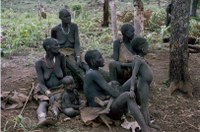
<dt><a rel="lightbox" href="/audiovisual/image-gallery/neighbours/Suri%20%28Chai%29/daasanach-night-guard-house-in-commercial-farm"><img src="http://www.mursi.org/audiovisual/image-gallery/neighbours/Suri%20%28Chai%29/daasanach-night-guard-house-in-commercial-farm/@@images/b48b3008-72b4-43aa-89cd-8267246bcf89.jpeg" alt="Women and children watching an argument between men" title="Women and children watching an argument between men" height="132" width="200" /></a></dt>
 <dd class="image-caption" style="width:200px;">Women and children watching an argument between men</dd>
</dl></p>
<p style="text-align: justify; ">To the west of the Mursi, across the Omo River, live two groups of agro-pastoralists called Tirmaga and Chai, who are together called ‘Suri’. This is their self-name in the context of ethnic relations in Southwest Ethiopia and South Sudan. A third group, speaking a somewhat different language, are the Baale (or ‘Balesi’, or ‘Kachipo’), who also live partly in the Republic of South Sudan and move regularly across the border, following interests dictated by trade, intermarriage, or the occasional search for better pastures in the dry season.</p>
<p style="text-align: justify; ">There are some 34,000 Suri in the Southwest of Ethiopia. The two Suri groups have a somewhat different internal composition and descent system, with the Tirmaga tracing more links with the highland Dizi (called ‘Su’), and the Chai, the larger group, having more of a Sudan connection and also being much closer to the Mursi with whom they intermarry and share agricultural areas near the Omo. The Kibish River runs across Suri territory from north to south, ending in Nyangatom territory, towards Lake Turkana.</p>
<p style="text-align: justify; ">The Suri area was conquered by imperial Ethiopian troops in 1897. The region was then formally incorporated into Ethiopia, and was the frequent target of cattle raids by highlanders and imperial troops based in the newly established villages (<i>katama</i>s).</p>
<p style="text-align: justify; ">The social and cultural similarity of Suri with the Mursi and to a lesser extent with the Didinga and Larim in South Sudan is notable, and can be recognized in a similar kinship organization, in birth, marriage and funeral customs, in a patrilineal clan structure and in age grades and initiation rites for age-sets. All Suri groups together with the Mursi have a similar age-set structure, and initiations into a new set ideally occur every 20 years in a series from west to east, i.e., first the Baale and last the Mursi. This sequence was, however, disturbed in 1991, a time of upheaval.</p>
<p><dl class="image-right captioned" style="width:169px;">
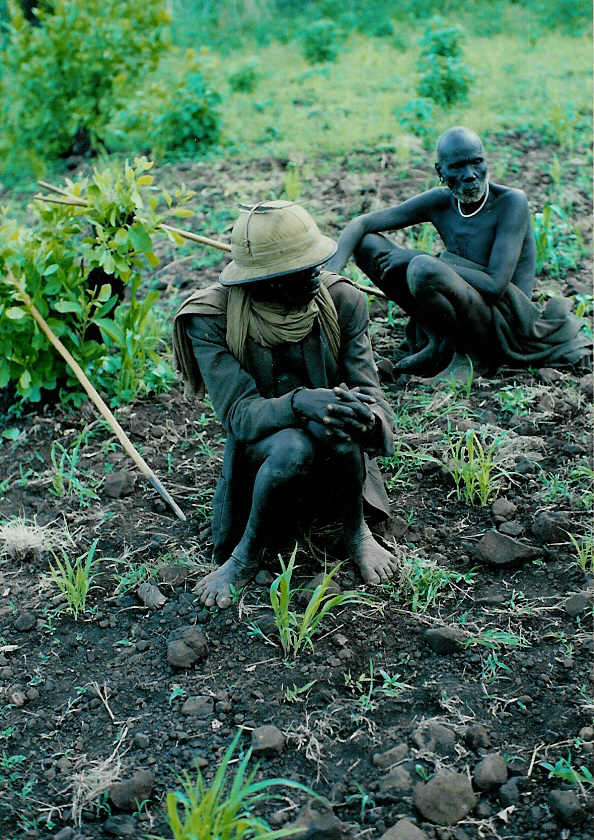
<dt><a rel="lightbox" href="/audiovisual/image-gallery/neighbours/Suri%20%28Chai%29/Harvest%20Time%20in%20Floodplain.JPG"><img src="http://www.mursi.org/audiovisual/image-gallery/neighbours/Suri%20%28Chai%29/Harvest%20Time%20in%20Floodplain.JPG/@@images/5759795d-d7e1-4adb-8f7a-695863d91fa6.jpeg" alt="Famous Suri Priest (Komoru Bolegid'angi)" title="Famous Suri Priest (Komoru Bolegid'angi)" height="240" width="169" /></a></dt>
 <dd class="image-caption" style="width:169px;">The late Bolegid'angi was a Tirmaga komoru in the 1990s.</dd>
</dl></p>
<p style="text-align: justify; ">Their society, while now more integrated into national Ethiopian structures of administration and more under the control of the state, previously had a fairly autonomous political structure, headed by the elders of the reigning age-grade as well as a few ritual chiefs or ‘priests’, called<i> komoru</i>, as among the Mursi.</p>
<p style="text-align: justify; ">The Suri have a traditional belief system with a supreme sky deity called <i>Tumu</i>. The <i>komoru </i>is a mediator between humans and Tumu, acting as a contact point with the sky god that brings rain and fertility. But Suri have no public religious services of any kind dedictaed to Tumu. Ancestors of clan-lines are also recognized as having powers and as influencing the health and destiny of living people. In the past 15 years, Evangelical Christianity has gained adherents among the Suri (some 200-300), notably among those in the town of Kibish and those that left the area to study.</p>
<p style="text-align: justify; ">The Suri have lived in the Ethio-Sudan border area for many generations, successfully surviving through a combination of livetsock hearding (cattle, goats and sheep), some hunting and gathering, rain-fed cultivation of a variety of field crops like millet, corn, and sorghum, and the garden cultivation of legumes, spice plants, peas and beans. Migration has been restricted due to armed conflict, state pressure and some very serious droughts which have led to food shortages and even famines in the past few decades. Since the late 1980s the Suri have also gained cash income from the sale of alluvial gold to highland traders in nearby villages. During the last five to seven years, this trade has suffered from strong competition from highlanders and army–related people, who have tended to push the Syuri out of business.</p>
<p style="text-align: justify; ">The post-1991 ‘ethnic–federal’ Ethiopian regime has formally accorded the Suri political autonomy in a separate ‘<i>woreda</i>’ (district) but the leadership of this district is carefully groomed and controlled by the authorities. The state does not really consult the Suri community leaders on any matter and has appointed its own advisors. Specially trained Suri youths were appointed as new leaders. There is a Suri (Chai) member of parliament and also one Baale member, but they have hardly any influence.</p>
<p><dl class="image-right captioned" style="width:200px;">
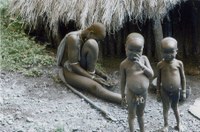
<dt><a rel="lightbox" href="/audiovisual/image-gallery/neighbours/Suri%20%28Chai%29/daasanach-women-building-investors-cattle-kraal"><img src="http://www.mursi.org/audiovisual/image-gallery/neighbours/Suri%20%28Chai%29/daasanach-women-building-investors-cattle-kraal/@@images/8f76ac85-e3df-4527-9b32-8ff480f5db1e.jpeg" alt="Suri woman with her children" title="Suri woman with her children" height="132" width="200" /></a></dt>
 <dd class="image-caption" style="width:200px;">Suri woman with her children</dd>
</dl></p>
<p style="text-align: justify; ">The Suri are a very interesting and tough people, who have had their share of problems with neighbouring peoples, like the Nyangatom (‘Bume’), the Anywa (Anuak), and the Dizi (an Omotic-speaking group of cultivators in the highlands around Maji, Tum and Jeba towns) who are closer to the government. Tensions also existed with the Toposa in South Sudan, allies of the Nyangatom, who frequently raided their cattle. There have also been violent clashes with the Tishana Me’en. Most problems in recent decades, however, have been with the authorities. The village highlanders, of mixed descent, tend to look down upon the Suri ‘nomads’. There is a dramatic history of conflicts and clashes of Suri with highlanders and national government officials, who have a deep distrust of the Suri and saw them always as uncivilized lowlanders ‘without religion’. This started under the <i>Derg</i> regime (1974-1991). Since about 1994 the Ethiopian state has stationed a military contingent among the Suri, allegedly for border patrol but, as it seems, primarily to intimidate the Suri. They have rarely helped the Suri in repelling the (cattle) raids of the Toposa coming from South Sudan into Ethiopia, although in 2007 a kind of truce was achieved. In recent years the consistent aim of the army has been to disarm the Suri, despite the fact that it has not guaranteed the security of the Suri vis-à-vis predations from neighbouring groups, including those from South Sudan.</p>
<p style="text-align: justify; ">Beyond recognizing them as a ‘nationality’ (or <i>behéreseb </i>in Amharic) and giving them a nominal administration, the post-1991 Ethiopian government has done little for the Suri, apart from taking over a missionary school for primary education, building a basic health clinic and giving occasional veterinary services. Support for agro-pastoralism or agrarian activities has not been visible.</p>
<p style="text-align: justify; ">The small but growing town of Kibish features as the capital of the Surma district and has some government services. New roads are being built in the area, to open it up for trade and business by highlanders and foreign investors. A large new Malaysian–owned plantation was recently built in the Koka Plains, north of the small town of Tum, using part of the Suri grazing areas which are now off-limits to them.</p>
<p style="text-align: justify; ">Local people assert that the government does not recognize the right of Suri to pursue their own culture and way of life – and they point to the campaigns to prohibit ceremonial stick duelling (a kind of sport), the culture of body decorations (e.g., ochre in the hair of females, the making of incisions in the skin, and the insertion of lip and ear discs by women), and the imposed changes in their livelihood system and herding practices.</p>
<p style="text-align: justify; ">Hundreds of tourists, travellers, photographers and film-makers have visited the Suri since the early 1990s and published popular articles and produced films on them. Women's lip plates and the stick duelling called <i>thagine, </i>a characteristic and cherished Suri institution which features prominently in their self-image,<i> </i>have been popular subjects of these articles and films.<i> </i></p>
<p style="text-align: justify; ">Suri history and society have been described by a number of scholars, among them Ethiopian medical researchers, the French author Christan Bader, Dutch ethno-historian Jon Abbink, and some others. As to language studies, the Tirmaga dialect was described by linguist Michael Bryant (1999). Some global press journalists and Ethiopian human rights reporters have written pieces on the recent problems and threats to Suri livelihoods in recent years.</p>
<p style="text-align: justify; ">The Suri economy and culture is under threat from outside forces such as the <a class="internal-link" href="http://www.mursi.org/change-and-development/large-scale-irrigation/large-scale-irrigation">new investment schemes by the Ethiopian government and some foreign companies</a>, which lead to land confiscations, resource pressure and the pushing out of the Suri from their traditional alluvial gold panning activities. They are also more and more forbidden to move around with their livestock and a limit was even  imposed on the size of their  cattle herds. One aim of the land alienation since 2010 has been to concentrate Suri together into new villages and have them give up cattle herding. In a predictable move, the government wants to make them into easily controllable farmers, settled in one spot, which ignores the potential of this area for extensive livestock-keeping. This is deeply resented by the Suri as it does not make economic or social sense to them to live huddled together in villages with no amenities and no room for cattle. They see it also as humiliating; all the more so because they were not consulted on anything and feel discriminated. Many violent incidents have already occurred in the area of the plantation. The Suri feel that their rights are not respected. This is even asserted by the few Suri ‘leaders’ (spokesmen) in the regional administration in Awasa (capital of the Southern Nations, Nationalities and Peoples’ Regional State) or in the national parliament – who are members of the ruling party. The Ethiopian federal government seems to have an unimaginative ‘one-size-fits-all’ top-down approach to land use and development. The confiscation of local lands and  the suppression of agro-pastoralism have endangered local systems of food security and group relations. Suri also see no attractive prospect in becoming low-paid labourers on the new foreign plantations, as this would make them dependent and marginalized. Like the other local peoples, the Suri are resilient and not against change, but cooperation in developmental ventures and better groups relations will only be favoured if overall policies of the administration – and those of ‘donor countries’ - improve substantially.</p>
<p><i><br /></i></p>
<p><strong>More Information<br /></strong></p>
<p>Abbink, Jon 2009 Conflict and social change on the south-west Ethiopian frontier: an analysis of Suri society. <i>Journal of Eastern African Studies</i> 39 (1): 22-41.</p>
<p>Abbink, Jon, Michael Bryant &amp; Daniel Bambu 2013 <i>Suri Orature</i><i>. </i>Cologne (Ger.): R. Koeppe Verlag.</p>
<p>Bader, Christian 2002 <i>Les Guerriers Nus. Aux Confins de l’Éthiopie</i><i>. </i>Paris: Payot &amp; Rivages.</p>
<p>Bryant, Michael 1999  <i>Aspects of Tirmaga Grammar</i><i> </i>. Arlington: University of Texas at Arlington (M.A. Thesis in Linguistics).</p>
<p>Feron, Benoît 2008  <i>Surma, Faces &amp; Bodies. </i>Bruxelles: La Renaissance du Livre.</p>
<p>Yetmgeta Eyayou, Yemane Berhane &amp; Legesse Zerihun  2004  Socio-cultural factors in decisions related to fertility in remotely located communities: The case of the Suri ethnic group. <i>Ethiopian Journal of Health Development</i> 18 (3): 171-174.</p>]]></content:encoded>
    <dc:publisher>No publisher</dc:publisher>
    <dc:creator>admin</dc:creator>
    <dc:rights></dc:rights>
    <dc:date>2020-07-22T07:55:00Z</dc:date>
    <dc:type>Page</dc:type>
  </item>


  <item rdf:about="http://www.mursi.org/comments">
    <title>Comments</title>
    <link>http://www.mursi.org/comments</link>
    <description></description>
    
    <dc:publisher>No publisher</dc:publisher>
    <dc:creator>admin</dc:creator>
    <dc:rights></dc:rights>
    <dc:date>2013-01-30T22:45:00Z</dc:date>
    <dc:type>Folder</dc:type>
  </item>


</rdf:RDF>